Cleaning of hydraulic blocks and manifolds is essential to ensure the proper operation and reliability of hydraulic systems. Even seemingly minor contamination can affect circuit performance and accelerate component wear.
| COMPONENT TO BE WASHED | Hydraulic blockss |
| DAILY PRODUCTIVITY | 2.000 hydraulic blocks |
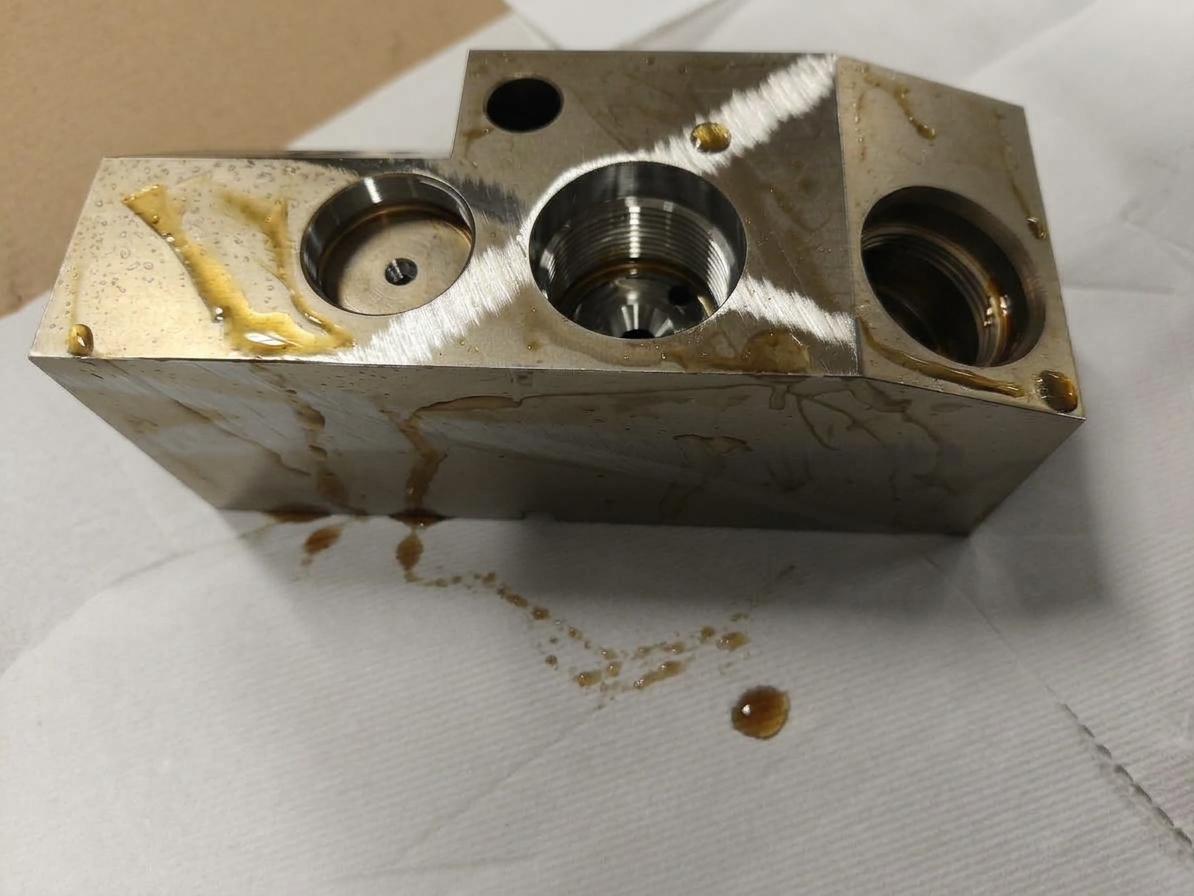
| TYPE OF CONTAMINANT | Undiluted machining oil and machining chips |
| CLEANLINESS REQUIREMENTS | Maximum particle size: 400 microns – Maximum residue: 1 mg per component |
| PARTS WASHING MACHINE USED | ROTOR 2B |
| DETERGENT USED | SG233A – 5% (degreasing agent) |
| SYSTEM LOADING CAPACITY | 50 Kg |
| TREATMENT TEMPERATURE | 65°C | TREATMENT TIME | 14 minutes |
THE PROBLEM: CONTAMINATED HYDRAULIC BLOCKS
The customer required a dedicated solution for cleaning hydraulic blocks contaminated with machining oil residues and chips. The objective was to obtain components cleaned in accordance with ISO 16232 specifications and ready for packaging and shipping.
Complete contaminant removal was necessary to prevent oil residues, metal particles or other impurities from remaining inside the channels and cavities of the components.
Contamination that is not adequately removed can compromise the operation of the entire hydraulic system.
What problems can a dirty hydraulic block cause?
Contaminants inside a hydraulic block can cause:
- Sticking or seized valves, due to particles accumulating in areas with very tight tolerances.
- Internal leakage and pressure loss, caused by wear or contamination of sealing surfaces.
- Valve switching failures, resulting in difficulties when actuating hydraulic cylinders and motors.
- Pressure drops and increased oil temperature, caused by blockages or reduced cross-sections in internal passages.
- Premature degradation of the hydraulic fluid, promoted by high temperatures.
- Accelerated wear of pumps, cylinders and motors, when contaminant particles recirculate through the system.
- Machine downtime and maintenance costs, in the event of failures caused by contamination.
For this reason, cleaning hydraulic blocks must ensure not only clean external surfaces but also effective contaminant removal from the component’s complex internal geometries.
THE SOLUTION: INDUSTRIAL CLEANING WITH ROTOR 2B
The ROTOR 2B was selected for cleaning the hydraulic blocks. This industrial parts washing machine is designed for cleaning mechanical, hydraulic and fluid-power components.
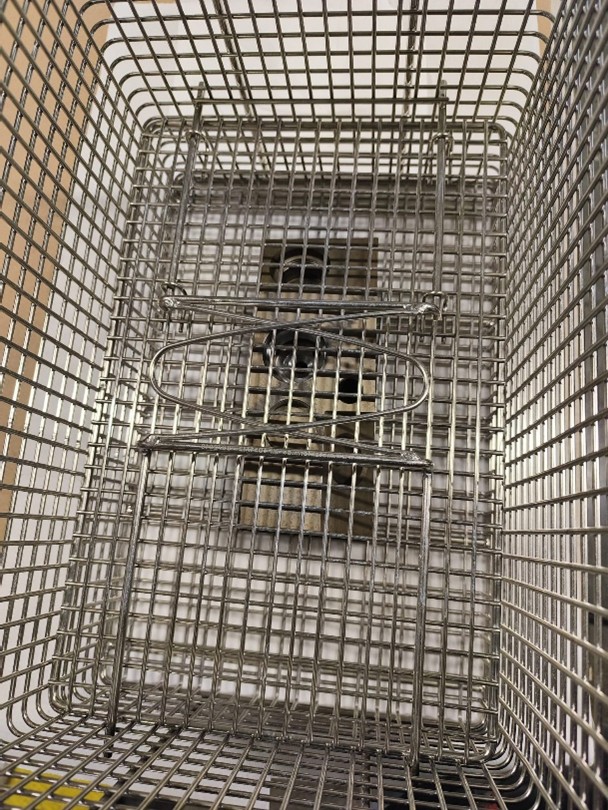
The system combines spray washing and hydrokinetic immersion cleaning through the motorised rotation and tilting of the basket, allowing the detergent to reach the different component surfaces effectively.
FEATURES:
1.Spray washing and hydrokinetic immersion cleaning: combining these two cleaning methods enables effective removal of oily contamination and residues inside the components.
2. Motorised basket rotation: during the cycle, rotation progressively exposes the different workpiece surfaces to the mechanical action of the spray jets and the chemical action of the detergent, improving cleaning uniformity.
3. System designed for industrial parts washing: the ROTOR 2B is designed to process mechanical and industrial components contaminated with oils, greases and machining residues, using a repeatable and controllable process.
BENEFITS ACHIEVED
Using the ROTOR 2B to clean hydraulic blocks made it possible to achieve the following results:
- Removal of residual machining oil from component surfaces.
- Removal of chips left over from previous machining operations.
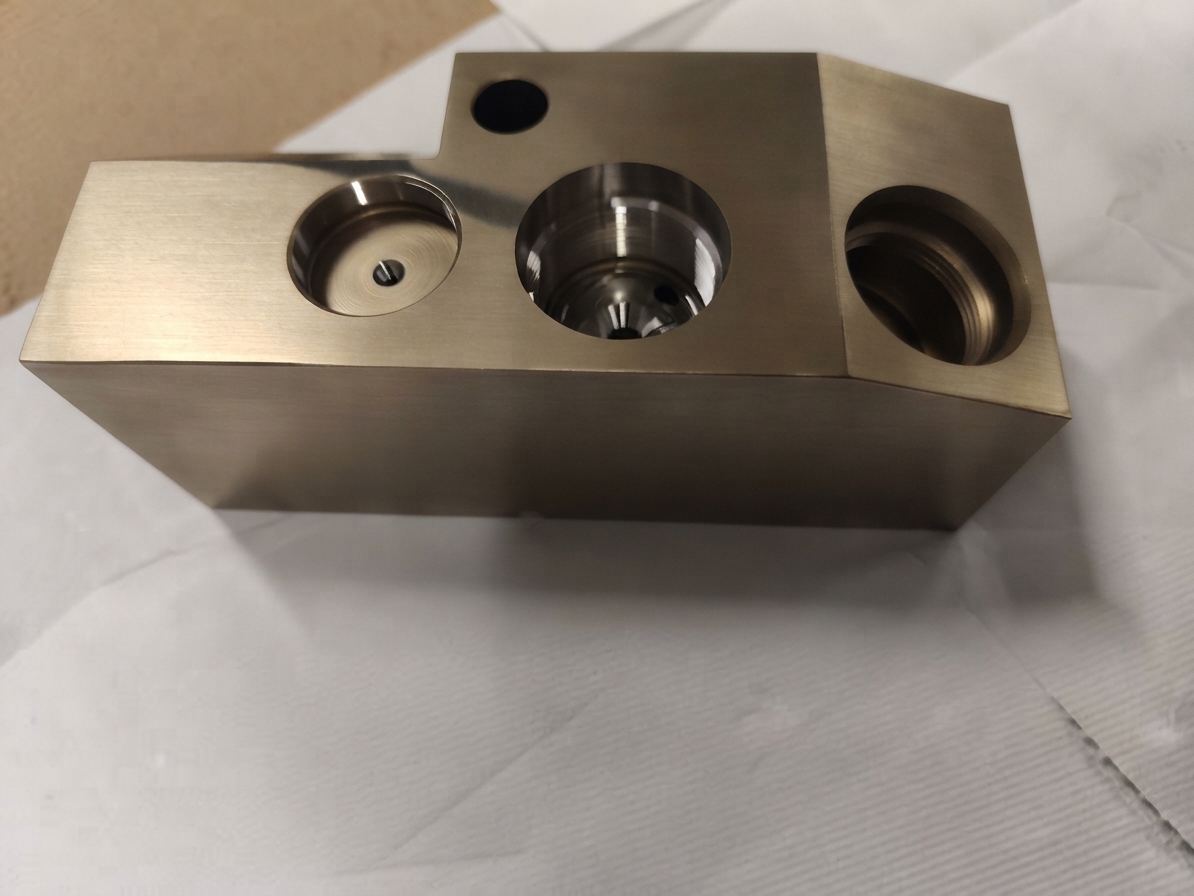
- Cleaning of components in accordance with the ISO 16232 specifications required by the customer.
- Reduced risk of contaminants and foreign particles entering the final circuit.
- A repeatable and scalable industrial cleaning process.
RESULT
Thanks to the ROTOR 2B, the customer was able to implement a dedicated industrial cleaning process for hydraulic blocks, obtaining components free from the solid and oily contamination present before treatment.
Proper cleaning of hydraulic blocks is an important step in preserving the reliability of valves and other system components, reducing the risk of residues and contaminant particles compromising system operation.